


Gist
The conversation around AI models often focuses on performance, but when building real applications, the cost of getting the job done matters just as much. GPT-4o Mini changes that conversation by offering strong performance at a significantly lower cost than larger models.

GPT-4o Mini was introduced at $0.15 per million input tokens and $0.60 per million output tokens, making it particularly interesting for applications that may require thousands or even millions of interactions.
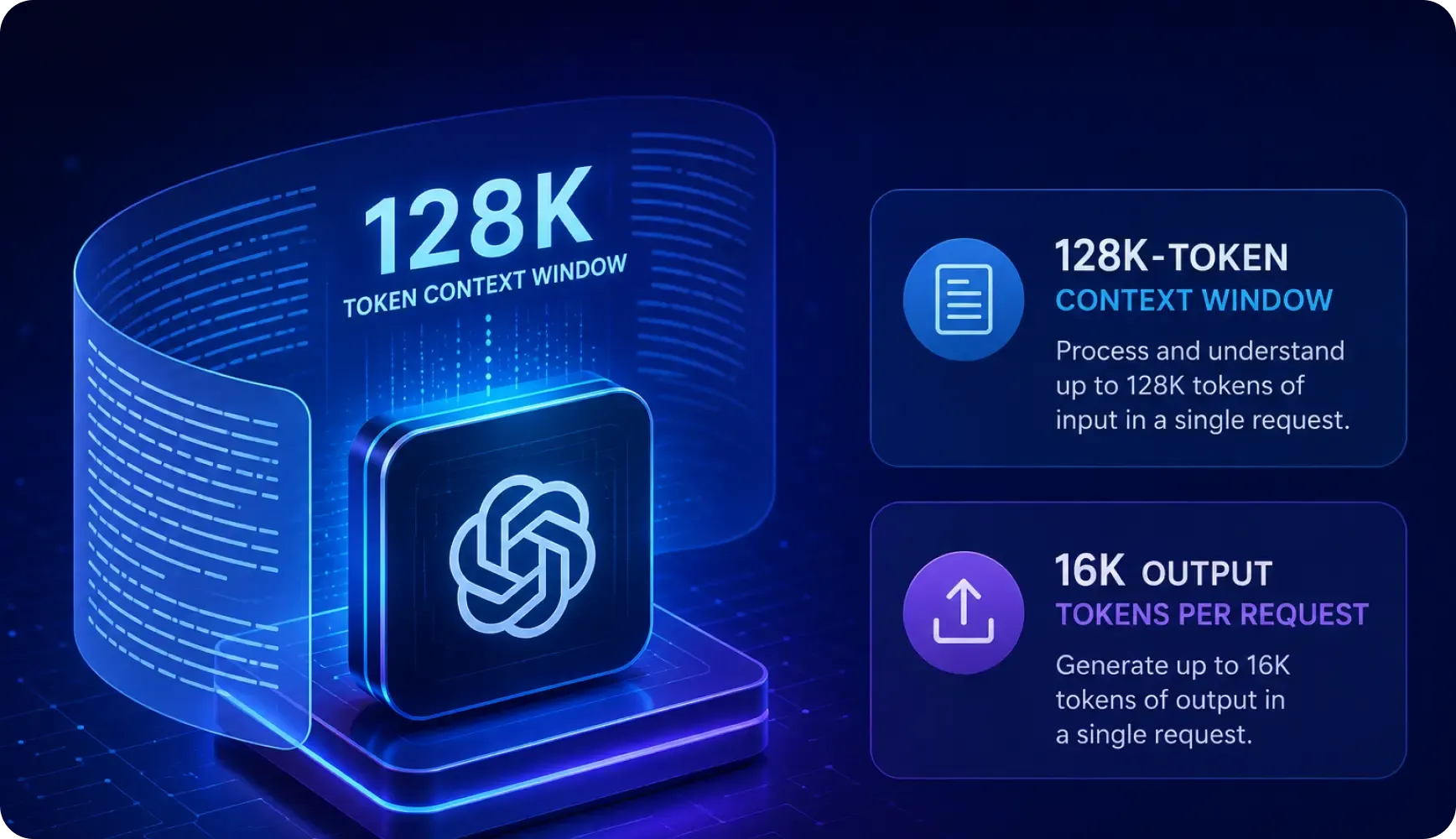
The model is designed for scenarios involving multiple model calls, large amounts of context, or low-latency responses, with a 128K-token context window and up to 16K output tokens per request.
Its benchmark performance, multimodal capabilities and safety evaluations make it worth considering, but benchmarks alone do not determine whether a model is right for a real application.
The more practical question is whether GPT-4o Mini can provide the right balance of capability, cost and speed for the application being built.
GPT-4o Mini: Can Smaller AI Models Really Deliver More for Less?
I have always found the conversation around AI models interesting. Every time a new, more powerful model comes out, the discussion quickly moves toward performance. How much better is it? What can it do that the previous model couldn't?
But there is another question that matters just as much when you're building something with AI.
How much does it cost to get the job done?
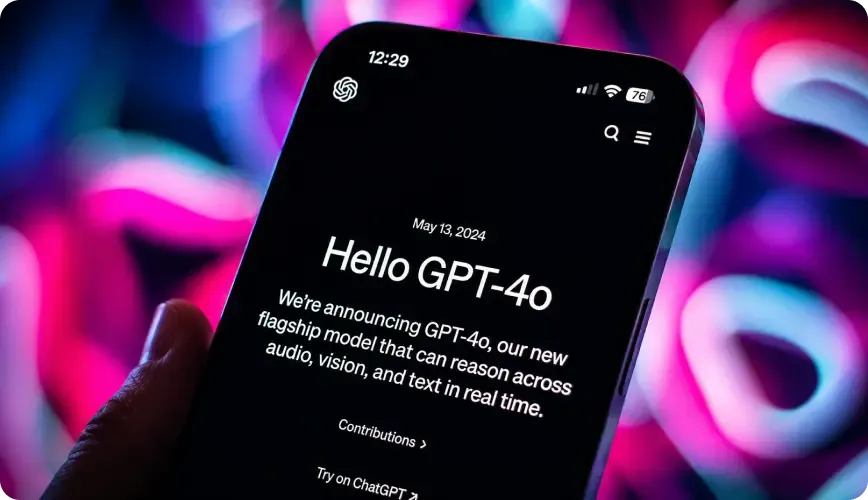
That is what caught my attention when OpenAI introduced GPT-4o Mini. It is a smaller model, but the interesting part is that OpenAI is positioning it as a model that can deliver strong performance without the cost associated with larger models and that changes the conversation a little.
The first thing that stood out to me was the cost
GPT-4o Mini was introduced at $0.15 per million input tokens and $0.60 per million output tokens.
That is significantly cheaper than using larger models for every interaction.
At first, a lower price can make you wonder whether there is a similar compromise in performance. But the early benchmark numbers make that assumption difficult to make.
GPT-4o Mini scored 82% on the MMLU benchmark and also performed better than GPT-3.5 Turbo in chat preferences on the LMSYS leaderboard.
For me, the interesting part isn't simply that it is cheaper.
It is that the price makes it much easier to think about using an AI model for applications where you may need thousands or even millions of interactions.
That is where a smaller model can become really useful.
Where I see the real opportunity
Think about a customer support chatbot.
A user asks a question. The system retrieves some context, sends it to the model, gets a response and does it again for the next customer.
Now imagine doing that at scale.
The cost of every individual request suddenly becomes important.
GPT-4o Mini is designed for exactly these kinds of scenarios where you may need multiple model calls, large amounts of context, or low-latency responses.
It currently supports text and vision, with support for picture, video and audio inputs and outputs planned for the future. It can handle a 128K-token context window and generate up to 16K output tokens per request.
So the question isn't really whether a smaller model can compete with the biggest model on every possible task.
It doesn't need to.
The more useful question is:
Can it do the job well enough for the application we are building?
That is a much more practical way to evaluate any AI model.
The benchmark numbers are interesting, but they aren't the whole story
GPT-4o Mini performs well across several academic benchmarks covering areas such as arithmetic, coding, multimodal reasoning and textual intelligence.
Benchmarks are useful because they give us a common point of comparison.
But I wouldn't make a model decision based only on benchmark scores.
Real applications behave differently.
The quality of the prompt, the amount of context provided, the type of task, response latency and how often the model needs to be called can all have a bigger impact on the actual experience.
This is why I think GPT-4o Mini is worth looking at as an application-level decision, rather than simply as another model to compare on a leaderboard.
There is also the safety question
Cost and performance are only part of the equation.
If we're going to use AI in real applications, we also need to understand how the model behaves when someone tries to manipulate it.
GPT-4o Mini includes additional safety evaluations and techniques such as OpenAI's instruction hierarchy approach, which is designed to improve resistance against jailbreaks and prompt injection attempts.
That doesn't mean developers can stop thinking about application security.
It simply gives developers another layer to work with.
And that's an important distinction when we're putting AI into production.
So, how does it compare with GPT-3.5 Turbo?
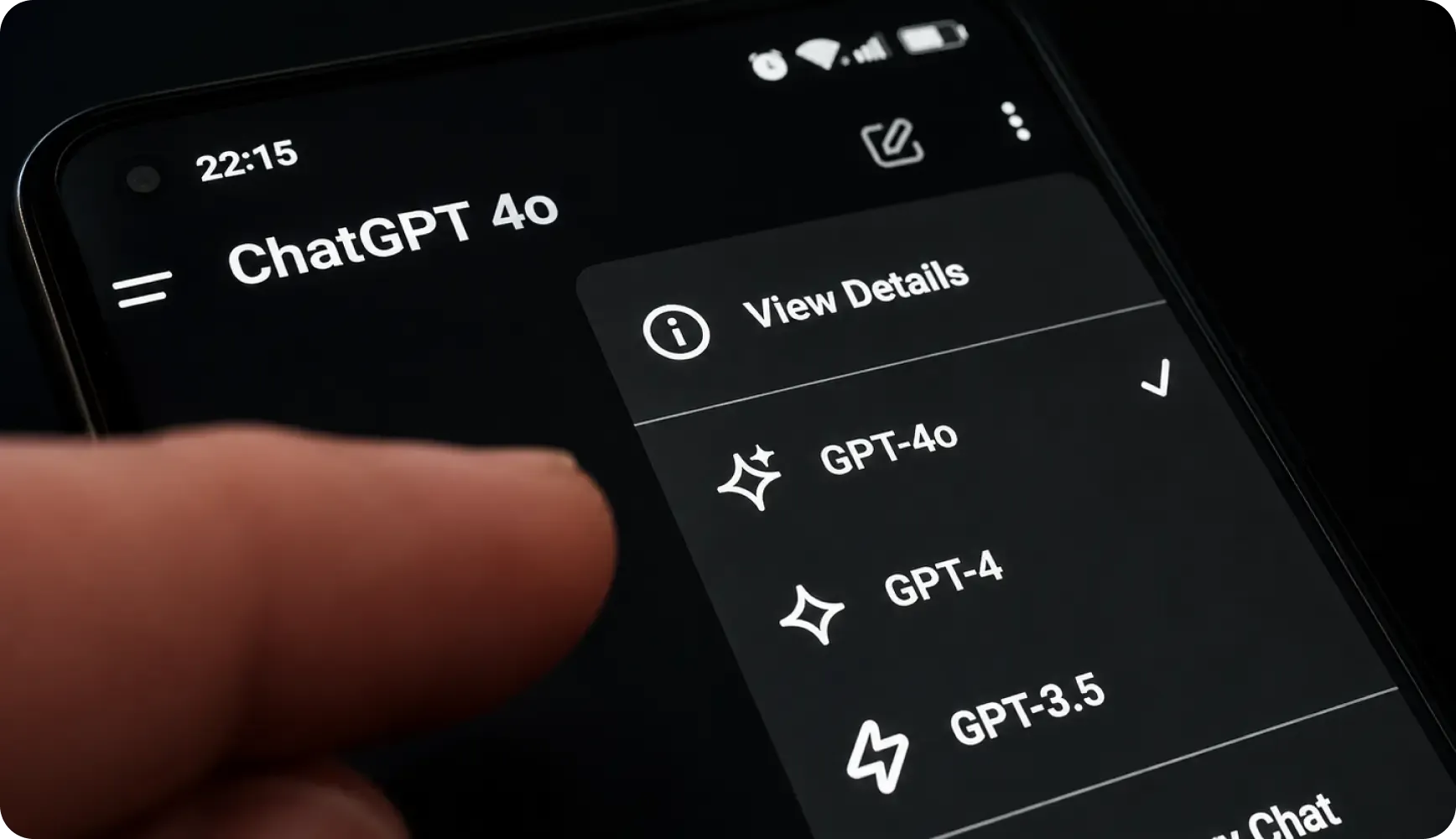
If I look at the information available around the launch, GPT-4o Mini has some clear advantages.
Cost is probably the biggest one. The lower price makes it practical for applications where the number of model calls can grow quickly.
Performance is another. It outperforms GPT-3.5 Turbo across several benchmarks.
Context is also important. A 128K-token context window gives applications significantly more room to work with larger amounts of information.
And then there is the multimodal direction, with text and vision supported and additional input and output types planned.
But I wouldn't call the decision completely one-sided.
GPT-4o Mini is a newer model, so real-world reliability still needs to be evaluated across different applications. Its current feature set also needs to be considered against what an existing GPT-3.5-based application already depends on.
That is where actual engineering evaluation matters.
My takeaway
What I find interesting about GPT-4o Mini isn't simply that OpenAI has released a cheaper model.
It is what the economics make possible.
When the cost of each interaction comes down significantly, developers can start considering AI for workflows where using a larger model for every request simply wouldn't make sense.
Customer support.
High-volume classification.
Applications that need multiple model calls.
Workflows that process large amounts of context.
These are the areas where I think smaller models can become particularly interesting.
The bigger lesson for me is that the best AI model isn't necessarily the most powerful one available.
It is the one that gives you the right balance of capability, cost and speed for the problem you're actually trying to solve.
And that is what makes GPT-4o Mini worth paying attention to.

